< Back
Glitz & Glam: Beauty in the 2000s
Glitz & Glam:
Beauty in the 2000s
Beauty Trends That Defined The 2000s
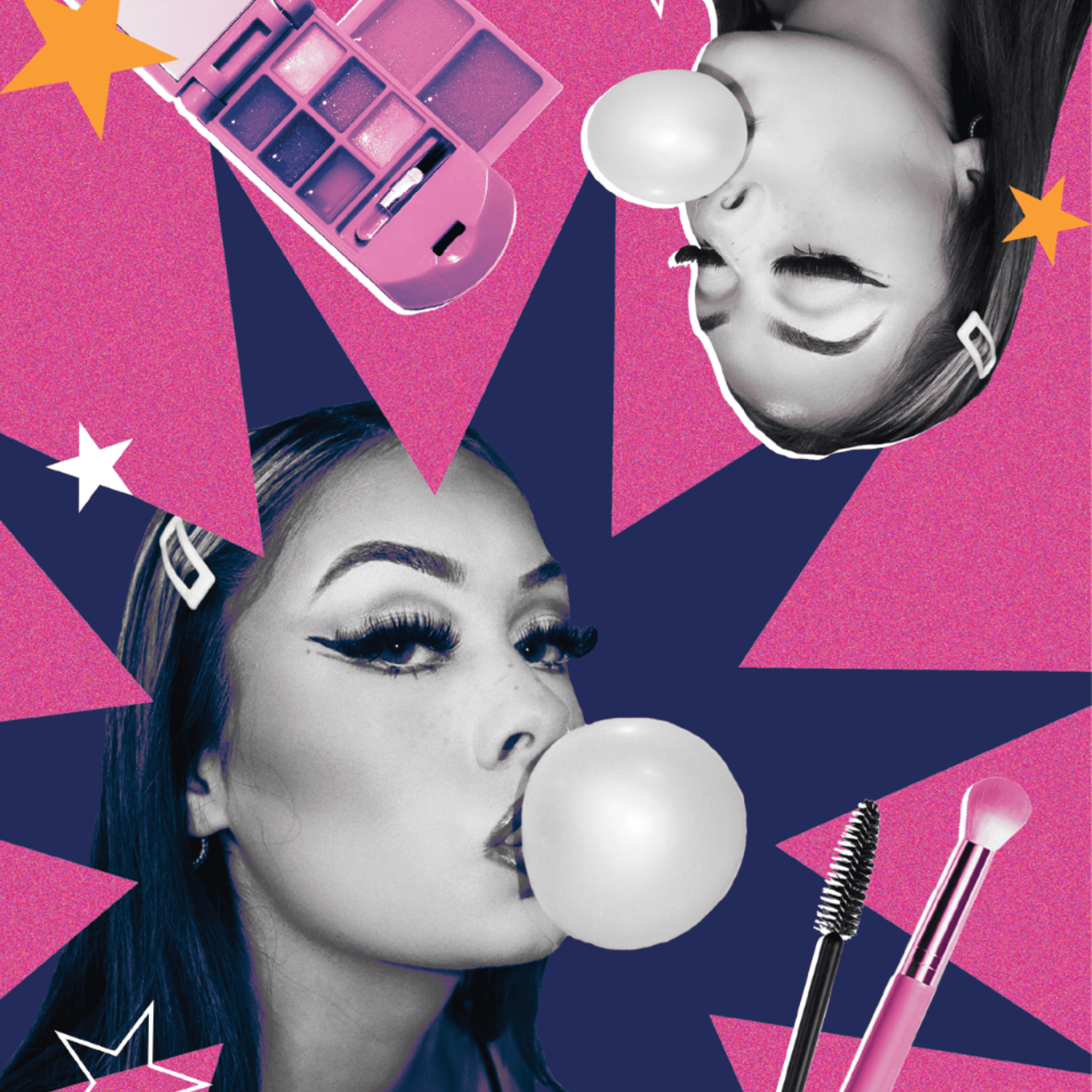
The early 2000s were an unforgettable era of beauty: a decade defined by shimmer, gloss and a fearless willingness to try everything at once. With red carpets, teen magazines and paparazzi flashes shaping the mainstream aesthetic, beauty trends leaned bold, playful and sometimes chaotic.
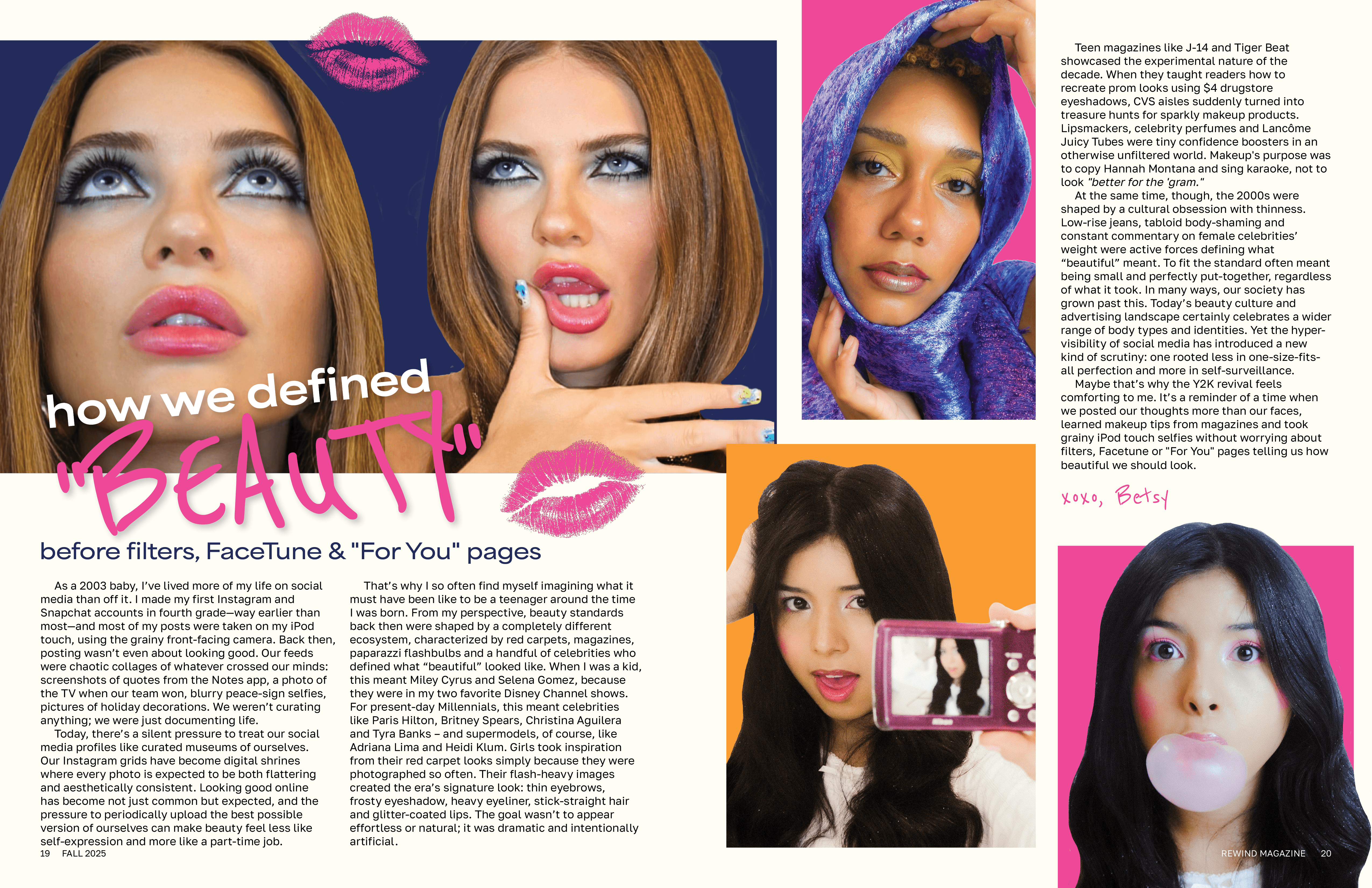
One of the most iconic looks of the decade was the frosted lip. Pearly white-pink lipstick, sometimes topped with a metallic gloss, became a signature on everyone from Britney Spears to the girls on The Hills. And if the frost wasn’t enough, the 2000s doubled down with super glossy lips, thanks to the rise of Lancôme Juicy Tubes and every glitter-infused gloss on the drugstore shelf. A shiny lip was the ultimate accessory, often paired with a darker lip liner for that unmistakably Y2K contrast.
The eyes were equally expressive. Purple, blue and teal eyeshadow dominated the decade, applied generously across the lid and often matched to outfits. Pairing bright shadow with heavy black eyeliner, especially on the waterline, created the edgy look famously worn by celebrities like Christina Aguilera. These colors weren’t subtle, since they were meant to pop under camera flashes and stand out in photos.
And, of course, no list is complete without the thin, overplucked eyebrows, the bronzer overload and the flat-ironed or crimped hair that made for an epic party- girl look. Add hot pink highlights or feather extensions to your hair, and you became the ultimate Y2K it-girl.
Looking back, the 2000s didn’t subscribe to minimalism or restraint. The beauty trends were loud, glittery and completely committed, which is why they remain so iconic today.
How We Defined "Beauty"
As a 2003 baby, I’ve lived more of my life on social media than off it. I made my first Instagram and Snapchat accounts in fourth grade—way earlier than most—and most of my posts were taken on my iPod touch, using the grainy front-facing camera. Back then, posting wasn’t even about looking good. Our feeds were chaotic collages of whatever crossed our minds: screenshots of quotes from the Notes app, a photo of the TV when our team won, blurry peace-sign selfies, pictures of holiday decorations. We weren’t curating anything; we were just documenting life.
Today, there’s a silent pressure to treat our social media profiles like curated museums of ourselves. Our Instagram grids have become digital shrines where every photo is expected to be both flattering and aesthetically consistent. Looking good online has become not just common but expected, and the pressure to periodically upload the best possible version of ourselves can make beauty feel less like self-expression and more like a part-time job.
That’s why I so often find myself imagining what it must have been like to be a teenager around the time I was born. From my perspective, beauty standards back then were shaped by a completely different ecosystem, characterized by red carpets, magazines, paparazzi flashbulbs and a handful of celebrities who defined what “beautiful” looked like. When I was a kid, this meant Miley Cyrus and Selena Gomez, because they were in my two favorite Disney Channel shows. For present-day Millennials, this meant celebrities like Paris Hilton, Britney Spears, Christina Aguilera and Tyra Banks – and supermodels, of course, like Adriana Lima and Heidi Klum. Girls took inspiration from their red carpet looks simply because they were photographed so often. Their flash-heavy images created the era’s signature look: thin eyebrows, frosty eyeshadow, heavy eyeliner, stick-straight hair and glitter-coated lips. The goal wasn’t to appear effortless or natural; it was dramatic and intentionally artificial.
Teen magazines like J-14 and Tiger Beat showcased the experimental nature of the decade. When they taught readers how to recreate prom looks using $4 drugstore eyeshadows, CVS aisles suddenly turned into treasure hunts for sparkly makeup products. Lipsmackers, celebrity perfumes and Lancôme Juicy Tubes were tiny confidence boosters in an otherwise unfiltered world. Makeup's purpose was to copy Hannah Montana and sing karaoke, not to look "better for the 'gram."
At the same time, though, the 2000s were shaped by a cultural obsession with thinness. Low-rise jeans, tabloid body-shaming and constant commentary on female celebrities’ weight were active forces defining what “beautiful” meant. To fit the standard often meant being small and perfectly put-together, regardless of what it took. In many ways, our society has grown past this. Today’s beauty culture and advertising landscape certainly celebrates a wider range of body types and identities. Yet the hyper- visibility of social media has introduced a new kind of scrutiny: one rooted less in one-size-fits- all perfection and more in self-surveillance.
Maybe that’s why the Y2K revival feels comforting to me. It’s a reminder of a time when we posted our thoughts more than our faces, learned makeup tips from magazines and took grainy iPod touch selfies without worrying about filters, Facetune or "For You" pages telling us how beautiful we should look.
Beauty Trends That Defined The 2000s
The early 2000s were an unforgettable era of beauty: a decade defined by shimmer, gloss and a fearless willingness to try everything at once. With red carpets, teen magazines and paparazzi flashes shaping the mainstream aesthetic, beauty trends leaned bold, playful and sometimes chaotic.
One of the most iconic looks of the decade was the frosted lip. Pearly white-pink lipstick, sometimes topped with a metallic gloss, became a signature on everyone from Britney Spears to the girls on The Hills. And if the frost wasn’t enough, the 2000s doubled down with super glossy lips, thanks to the rise of Lancôme Juicy Tubes and every glitter-infused gloss on the drugstore shelf. A shiny lip was the ultimate accessory, often paired with a darker lip liner for that unmistakably Y2K contrast.
The eyes were equally expressive. Purple, blue and teal eyeshadow dominated the decade, applied generously across the lid and often matched to outfits. Pairing bright shadow with heavy black eyeliner, especially on the waterline, created the edgy look famously worn by celebrities like Christina Aguilera. These colors weren’t subtle, since they were meant to pop under camera flashes and stand out in photos.
And, of course, no list is complete without the thin, overplucked eyebrows, the bronzer overload and the flat-ironed or crimped hair that made for an epic party- girl look. Add hot pink highlights or feather extensions to your hair, and you became the ultimate Y2K it-girl.
Looking back, the 2000s didn’t subscribe to minimalism or restraint. The beauty trends were loud, glittery and completely committed, which is why they remain so iconic today.
How We Defined "Beauty"
As a 2003 baby, I’ve lived more of my life on social media than off it. I made my first Instagram and Snapchat accounts in fourth grade—way earlier than most—and most of my posts were taken on my iPod touch, using the grainy front-facing camera. Back then, posting wasn’t even about looking good. Our feeds were chaotic collages of whatever crossed our minds: screenshots of quotes from the Notes app, a photo of the TV when our team won, blurry peace-sign selfies, pictures of holiday decorations. We weren’t curating anything; we were just documenting life.
Today, there’s a silent pressure to treat our social media profiles like curated museums of ourselves. Our Instagram grids have become digital shrines where every photo is expected to be both flattering and aesthetically consistent. Looking good online has become not just common but expected, and the pressure to periodically upload the best possible version of ourselves can make beauty feel less like self-expression and more like a part-time job.
That’s why I so often find myself imagining what it must have been like to be a teenager around the time I was born. From my perspective, beauty standards back then were shaped by a completely different ecosystem, characterized by red carpets, magazines, paparazzi flashbulbs and a handful of celebrities who defined what “beautiful” looked like. When I was a kid, this meant Miley Cyrus and Selena Gomez, because they were in my two favorite Disney Channel shows. For present-day Millennials, this meant celebrities like Paris Hilton, Britney Spears, Christina Aguilera and Tyra Banks – and supermodels, of course, like Adriana Lima and Heidi Klum. Girls took inspiration from their red carpet looks simply because they were photographed so often. Their flash-heavy images created the era’s signature look: thin eyebrows, frosty eyeshadow, heavy eyeliner, stick-straight hair and glitter-coated lips. The goal wasn’t to appear effortless or natural; it was dramatic and intentionally artificial.
Teen magazines like J-14 and Tiger Beat showcased the experimental nature of the decade. When they taught readers how to recreate prom looks using $4 drugstore eyeshadows, CVS aisles suddenly turned into treasure hunts for sparkly makeup products. Lipsmackers, celebrity perfumes and Lancôme Juicy Tubes were tiny confidence boosters in an otherwise unfiltered world. Makeup's purpose was to copy Hannah Montana and sing karaoke, not to look "better for the 'gram."
At the same time, though, the 2000s were shaped by a cultural obsession with thinness. Low-rise jeans, tabloid body-shaming and constant commentary on female celebrities’ weight were active forces defining what “beautiful” meant. To fit the standard often meant being small and perfectly put-together, regardless of what it took. In many ways, our society has grown past this. Today’s beauty culture and advertising landscape certainly celebrates a wider range of body types and identities. Yet the hyper- visibility of social media has introduced a new kind of scrutiny: one rooted less in one-size-fits- all perfection and more in self-surveillance.
Maybe that’s why the Y2K revival feels comforting to me. It’s a reminder of a time when we posted our thoughts more than our faces, learned makeup tips from magazines and took grainy iPod touch selfies without worrying about filters, Facetune or "For You" pages telling us how beautiful we should look.