Before Tech Was Smart
Before Tech Was Smart

Before every screen could do everything, we used devices that had one purpose and did it well. They were simple, sometimes inconvenient, but they shaped the way we grew up. Each piece of technology had its own rhythm, its own role in our daily lives. Growing up, we all interacted with the world in ways that quietly shaped who we are today, but for Generation Z, who were born roughly between 1997 and 2012, that experience was especially unique. We were the last generation to have a mostly offline childhood, riding bikes around the neighborhood, swapping CDs at school, burning mixes for friends and the first to grow up alongside the rise of the digital world. Before smartphones and social media exploded, our relationship with technology felt hands-on, exciting and full of discovery.
The Flip Phone Era
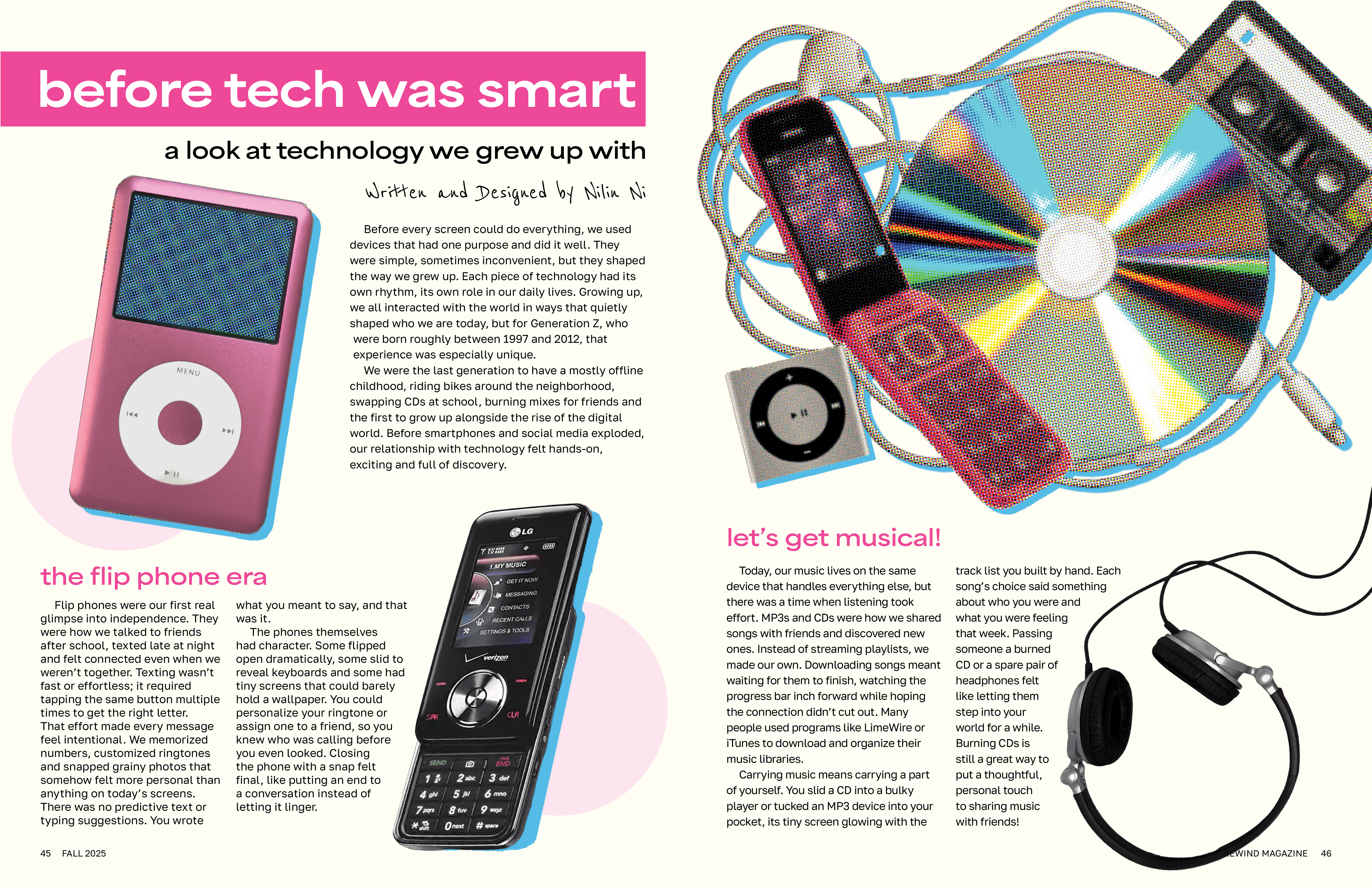
Today, our music lives on the same device that handles everything else, but there was a time when listening took effort. MP3s and CDs were how we shared songs with friends and discovered new ones. Instead of streaming playlists, we made our own. Downloading songs meant waiting for them to finish, watching the progress bar inch forward while hoping the connection didn’t cut out. Many people used programs like LimeWire or iTunes to download and organize their music libraries.
Carrying music means carrying a part of yourself. You slid a CD into a bulky player or tucked an MP3 device into your pocket, its tiny screen glowing with the track list you built by hand. Each song’s choice said something about who you were and what you were feeling that week. Passing someone a burned CD or a spare pair of headphones felt like letting them step into your world for a while. Burning CDs is still a great way to put a thoughtful, personal touch to sharing music with friends!
Let's Get Musical
Today, our music lives on the same device that handles everything else, but there was a time when listening took effort. MP3s and CDs were how we shared songs with friends and discovered new ones. Instead of streaming playlists, we made our own. Downloading songs meant waiting for them to finish, watching the progress bar inch forward while hoping the connection didn’t cut out. Many people used programs like LimeWire or iTunes to download and organize their music libraries. Carrying music means carrying a part of yourself. You slid a CD into a bulky player or tucked an MP3 device into your pocket, its tiny screen glowing with the track list you built by hand. Each song’s choice said something about who you were and what you were feeling that week. Passing someone a burned CD or a spare pair of headphones felt like letting them step into your world for a while. Burning CDs is still a great way to put a thoughtful, personal touch to sharing music with friends!
1...2...3... cheese!
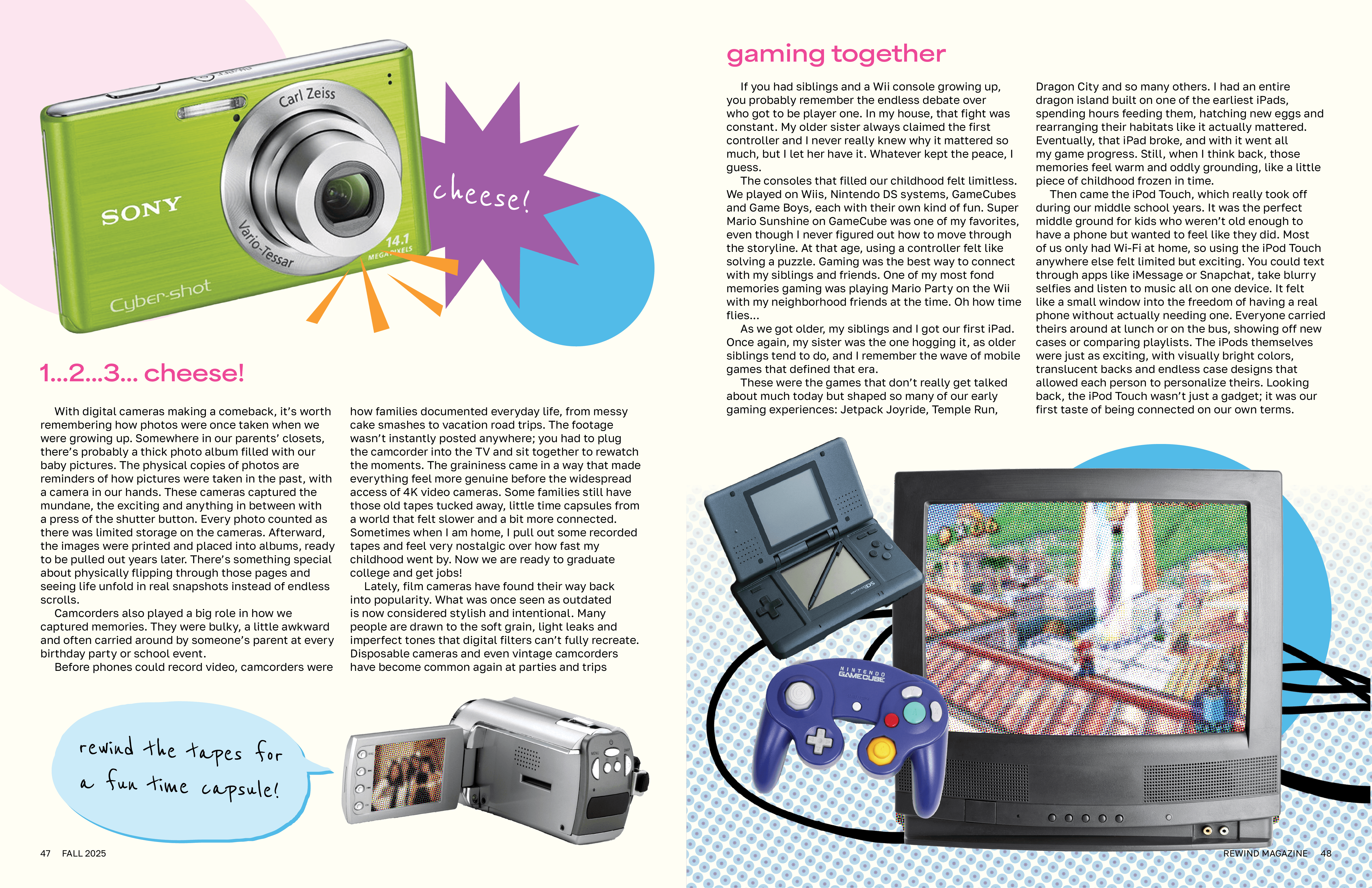
With digital cameras making a comeback, it’s worth remembering how photos were once taken when we were growing up. Somewhere in our parents’ closets, there’s probably a thick photo album filled with our baby pictures. The physical copies of photos are reminders of how pictures were taken in the past, with a camera in our hands. These cameras captured the mundane, the exciting and anything in between with a press of the shutter button. Every photo counted as there was limited storage on the cameras. Afterward, the images were printed and placed into albums, ready to be pulled out years later. There’s something special about physically flipping through those pages and seeing life unfold in real snapshots instead of endless scrolls.
Camcorders also played a big role in how we captured memories. They were bulky, a little awkward and often carried around by someone’s parent at every birthday party or school event. Before phones could record video, camcorders were how families documented everyday life, from messy cake smashes to vacation road trips. The footage wasn’t instantly posted anywhere; you had to plug the camcorder into the TV and sit together to rewatch the moments. The graininess came in a way that made everything feel more genuine before the widespread access of 4K video cameras. Some families still have those old tapes tucked away, little time capsules from a world that felt slower and a bit more connected. Sometimes when I am home, I pull out some recorded tapes and feel very nostalgic over how fast my childhood went by.
Now we are ready to graduate college and get jobs! Lately, film cameras have found their way back into popularity. What was once seen as outdated is now considered stylish and intentional. Many people are drawn to the soft grain, light leaks and imperfect tones that digital filters can’t fully recreate. Disposable cameras and even vintage camcorders have become common again at parties and trips
Gaming Together
If you had siblings and a Wii console growing up, you probably remember the endless debate over who got to be player one. In my house, that fight was constant. My older sister always claimed the first controller and I never really knew why it mattered so much, but I let her have it. Whatever kept the peace, I guess. The consoles that filled our childhood felt limitless. We played on Wiis, Nintendo DS systems, GameCubes and Game Boys, each with their own kind of fun. Super Mario Sunshine on GameCube was one of my favorites, even though I never figured out how to move through the storyline. At that age, using a controller felt like solving a puzzle. Gaming was the best way to connect with my siblings and friends. One of my most fond memories gaming was playing Mario Party on the Wii with my neighborhood friends at the time. Oh how time flies...
As we got older, my siblings and I got our first iPad. Once again, my sister was the one hogging it, as older siblings tend to do, and I remember the wave of mobile games that defined that era. These were the games that don’t really get talked about much today but shaped so many of our early gaming experiences: Jetpack Joyride, Temple Run, Dragon City and so many others. I had an entire dragon island built on one of the earliest iPads, spending hours feeding them, hatching new eggs and rearranging their habitats like it actually mattered. Eventually, that iPad broke, and with it went all my game progress. Still, when I think back, those memories feel warm and oddly grounding, like a little piece of childhood frozen in time.
Then came the iPod Touch, which really took off during our middle school years. It was the perfect middle ground for kids who weren’t old enough to have a phone but wanted to feel like they did. Most of us only had Wi-Fi at home, so using the iPod Touch anywhere else felt limited but exciting. You could text through apps like iMessage or Snapchat, take blurry selfies and listen to music all on one device. It felt like a small window into the freedom of having a real phone without actually needing one. Everyone carried theirs around at lunch or on the bus, showing off new cases or comparing playlists. The iPods themselves were just as exciting, with visually bright colors, translucent backs and endless case designs that allowed each person to personalize theirs. Looking back, the iPod Touch wasn’t just a gadget; it was our first taste of being connected on our own terms.
Before every screen could do everything, we used devices that had one purpose and did it well. They were simple, sometimes inconvenient, but they shaped the way we grew up. Each piece of technology had its own rhythm, its own role in our daily lives. Growing up, we all interacted with the world in ways that quietly shaped who we are today, but for Generation Z, who were born roughly between 1997 and 2012, that experience was especially unique. We were the last generation to have a mostly offline childhood, riding bikes around the neighborhood, swapping CDs at school, burning mixes for friends and the first to grow up alongside the rise of the digital world. Before smartphones and social media exploded, our relationship with technology felt hands-on, exciting and full of discovery.
The Flip Phone Era
Today, our music lives on the same device that handles everything else, but there was a time when listening took effort. MP3s and CDs were how we shared songs with friends and discovered new ones. Instead of streaming playlists, we made our own. Downloading songs meant waiting for them to finish, watching the progress bar inch forward while hoping the connection didn’t cut out. Many people used programs like LimeWire or iTunes to download and organize their music libraries.
Carrying music means carrying a part of yourself. You slid a CD into a bulky player or tucked an MP3 device into your pocket, its tiny screen glowing with the track list you built by hand. Each song’s choice said something about who you were and what you were feeling that week. Passing someone a burned CD or a spare pair of headphones felt like letting them step into your world for a while. Burning CDs is still a great way to put a thoughtful, personal touch to sharing music with friends!
Let's Get Musical
Today, our music lives on the same device that handles everything else, but there was a time when listening took effort. MP3s and CDs were how we shared songs with friends and discovered new ones. Instead of streaming playlists, we made our own. Downloading songs meant waiting for them to finish, watching the progress bar inch forward while hoping the connection didn’t cut out. Many people used programs like LimeWire or iTunes to download and organize their music libraries. Carrying music means carrying a part of yourself. You slid a CD into a bulky player or tucked an MP3 device into your pocket, its tiny screen glowing with the track list you built by hand. Each song’s choice said something about who you were and what you were feeling that week. Passing someone a burned CD or a spare pair of headphones felt like letting them step into your world for a while. Burning CDs is still a great way to put a thoughtful, personal touch to sharing music with friends!
1...2...3... cheese!
With digital cameras making a comeback, it’s worth remembering how photos were once taken when we were growing up. Somewhere in our parents’ closets, there’s probably a thick photo album filled with our baby pictures. The physical copies of photos are reminders of how pictures were taken in the past, with a camera in our hands. These cameras captured the mundane, the exciting and anything in between with a press of the shutter button. Every photo counted as there was limited storage on the cameras. Afterward, the images were printed and placed into albums, ready to be pulled out years later. There’s something special about physically flipping through those pages and seeing life unfold in real snapshots instead of endless scrolls.
Camcorders also played a big role in how we captured memories. They were bulky, a little awkward and often carried around by someone’s parent at every birthday party or school event. Before phones could record video, camcorders were how families documented everyday life, from messy cake smashes to vacation road trips. The footage wasn’t instantly posted anywhere; you had to plug the camcorder into the TV and sit together to rewatch the moments. The graininess came in a way that made everything feel more genuine before the widespread access of 4K video cameras. Some families still have those old tapes tucked away, little time capsules from a world that felt slower and a bit more connected. Sometimes when I am home, I pull out some recorded tapes and feel very nostalgic over how fast my childhood went by.
Now we are ready to graduate college and get jobs! Lately, film cameras have found their way back into popularity. What was once seen as outdated is now considered stylish and intentional. Many people are drawn to the soft grain, light leaks and imperfect tones that digital filters can’t fully recreate. Disposable cameras and even vintage camcorders have become common again at parties and trips
Gaming Together
If you had siblings and a Wii console growing up, you probably remember the endless debate over who got to be player one. In my house, that fight was constant. My older sister always claimed the first controller and I never really knew why it mattered so much, but I let her have it. Whatever kept the peace, I guess. The consoles that filled our childhood felt limitless. We played on Wiis, Nintendo DS systems, GameCubes and Game Boys, each with their own kind of fun. Super Mario Sunshine on GameCube was one of my favorites, even though I never figured out how to move through the storyline. At that age, using a controller felt like solving a puzzle. Gaming was the best way to connect with my siblings and friends. One of my most fond memories gaming was playing Mario Party on the Wii with my neighborhood friends at the time. Oh how time flies...
As we got older, my siblings and I got our first iPad. Once again, my sister was the one hogging it, as older siblings tend to do, and I remember the wave of mobile games that defined that era. These were the games that don’t really get talked about much today but shaped so many of our early gaming experiences: Jetpack Joyride, Temple Run, Dragon City and so many others. I had an entire dragon island built on one of the earliest iPads, spending hours feeding them, hatching new eggs and rearranging their habitats like it actually mattered. Eventually, that iPad broke, and with it went all my game progress. Still, when I think back, those memories feel warm and oddly grounding, like a little piece of childhood frozen in time.
Then came the iPod Touch, which really took off during our middle school years. It was the perfect middle ground for kids who weren’t old enough to have a phone but wanted to feel like they did. Most of us only had Wi-Fi at home, so using the iPod Touch anywhere else felt limited but exciting. You could text through apps like iMessage or Snapchat, take blurry selfies and listen to music all on one device. It felt like a small window into the freedom of having a real phone without actually needing one. Everyone carried theirs around at lunch or on the bus, showing off new cases or comparing playlists. The iPods themselves were just as exciting, with visually bright colors, translucent backs and endless case designs that allowed each person to personalize theirs. Looking back, the iPod Touch wasn’t just a gadget; it was our first taste of being connected on our own terms.